


Finding a Groove Together
time
Min read time
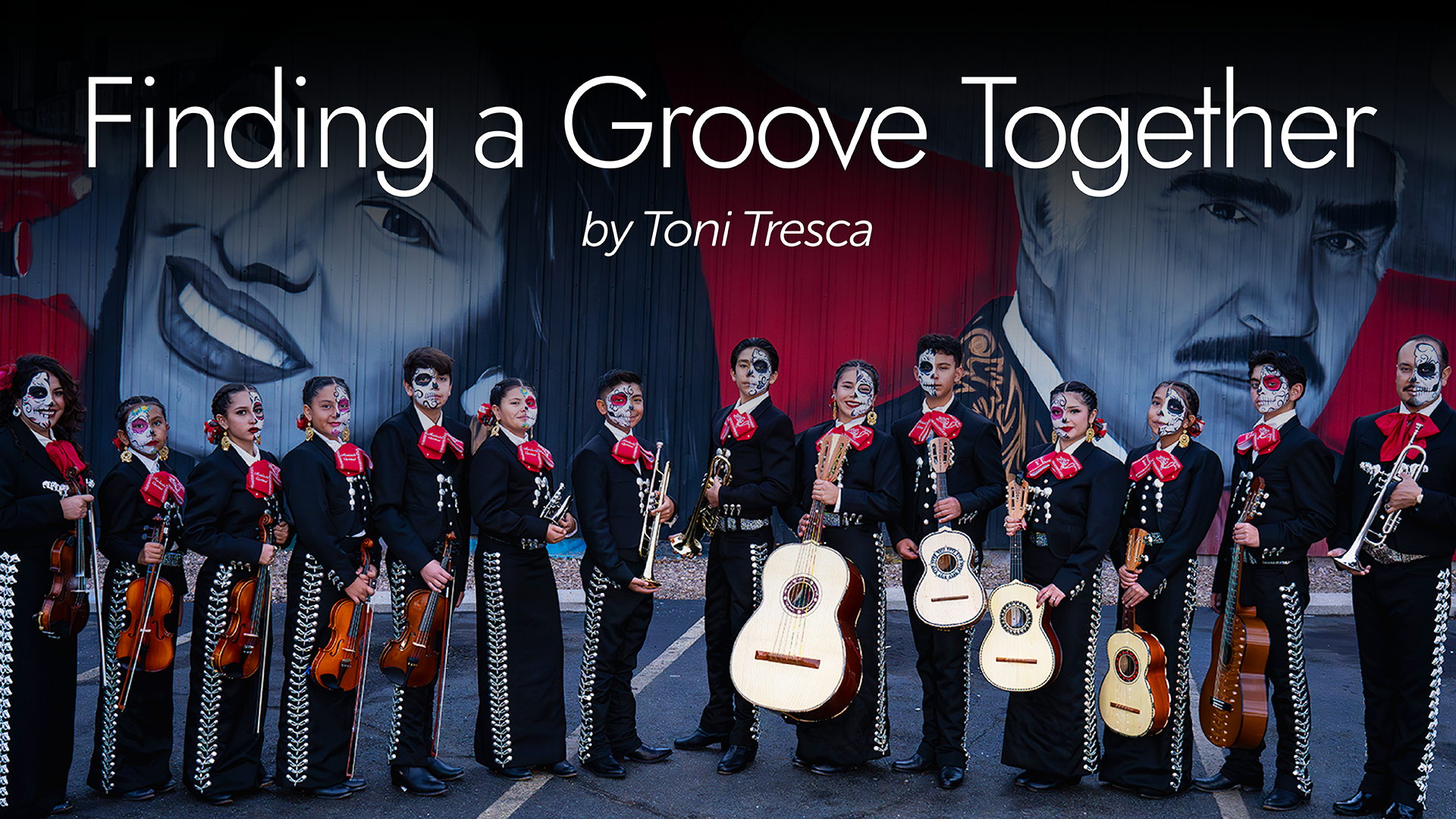
On a recent Tuesday evening, 11 middle and high school-aged students clustered together inside the Re:Vision office in Denver’s Westwood neighborhood. Packed with plants, boxes and desks, the space’s center had been cleared for In Lak’ech Denver Arts’ intermediate mariachi rehearsal.
The youth ensemble, Mariachi Quetzal, was preparing for its Cinco de Mayo performance. For the time being, however, the room was filled with the loose energy of students returning from school, who chatted loudly while pulling instruments from their cases and nudging music stands into place.
Valentina Montes Villalobos, a sixth grader at Global Village Academy, tuned her trumpet while her sister, Juliana Montes Villalobos, a high school freshman at STEAD School, practiced a lick on her guitar nearby. Across the room, a pair of vihuela players laughed quietly before settling into their chairs. Parents lingered near the edges of the room, talking softly.
The space hummed with overlapping sounds: strings warming, horns testing notes and snippets of conversation unfolding in English and Spanish. Then the focus narrowed. RaeLynn and Matthew Martinez, the class's husband-and-wife teachers, distribute a new arrangement of the Latin music standard "Solamente una Vez."
"This might crash and burn," RaeLynn warned me before the group tried to sight-read the piece.
It did not.
There were rough spots — a trumpet entered late, some strumming slipped off tempo and a violinist glanced up mid-phrase, trying to find the beat — but the young players made it through. The instructors then began working in sections on the more difficult passages, with Raelynn leading the three violins and two guitars and Matthew coaching the two trumpets, two guitarrons, and two vihuelas.
On the next run, the piece held together a little longer. Shoulders relaxed. Phrases strengthened. By the third time through, the rhythm had settled into a confident groove.
“A lot of other types of music go away, but mariachi music has been passed on from generation to generation,” said RaeLynn, who started playing mariachi when she was 10.
Mariachi sits at the heart of In Lak’ech Denver Arts — named for a Mayan phrase meaning “you are my other me” — the Southwest Denver organization founded by Marianna Lucero in 2020. The program, which received the Denver’s Mayor’s Award for Excellence in Arts and Culture in 2024, offers free folklórico, mariachi and visual arts classes led by local artists for fifth- through 12th-grade BIPOC youth.
“Growing up in this community, I didn't have access to this kind of programming,” Lucero said. “For my mom, born and raised in Mexico, folklórico and mariachi were part of her education, but those things weren’t reflected in mine.”
What began as a small pandemic-era pilot program now serves more than 100 students. The organization currently operates without a permanent home, renting space where it can. Many students move between disciplines, taking dance, music and visual arts classes throughout the week.
“I’m of Mexican heritage, so having them learn mariachi has been such a blessing for me,” Mary Lou Villalobos said about her daughters. “I am so proud of them because they have grown so much because of In Lak’ech.”
Standing in the parking lot during a break, Valentina shared that "the community is what keeps me coming back. They make us feel like we’re family.”
“Yeah, and they push us to do new stuff, even if we’re not comfortable, because they know we can do it,” her sister Juliana added. “I love performing and being able to show other people mariachi who aren’t part of our culture.”
Lucia Perales Rodriguez, a junior at Arrupe Jesuit High School who plays the vihuela, performs folklórico, and has recently started teaching dance to younger students, concurred.
“I like that I get to learn more about my culture, especially during this time where people are suppressing it and making us feel ashamed about our heritage,” she said. “It's nice to be advocating for it through dance, music and things that are fun for me.”
The Martinezes are in their third year teaching with In Lak’ech. "It's very important to understand the music that our parents, grandparents, great-grandparents and so on grew up listening to," said Matthew, who has been playing mariachi since he was 13 years old. “It’s kind of like keeping jazz alive or keeping any other kind of folk music alive.”
As the first part of rehearsal drew to a close, the group shifted into a song from its repertoire, “La Negra,” a fast-paced standard. This time, the rhythm instantly locked in. Heads bobbed, feet tapped and Valentina's assured trumpet cut cleanly through the room. By the final chorus, the hesitations from earlier in the evening were gone. The students grinned at one another, already sounding less like a rehearsal group than a mariachi band finding its voice together.

In addition to mariachi, In Lak'ech has been offering free folklorico and visual arts classes for more than five years. Credit: Courtesy In Lak'ech.
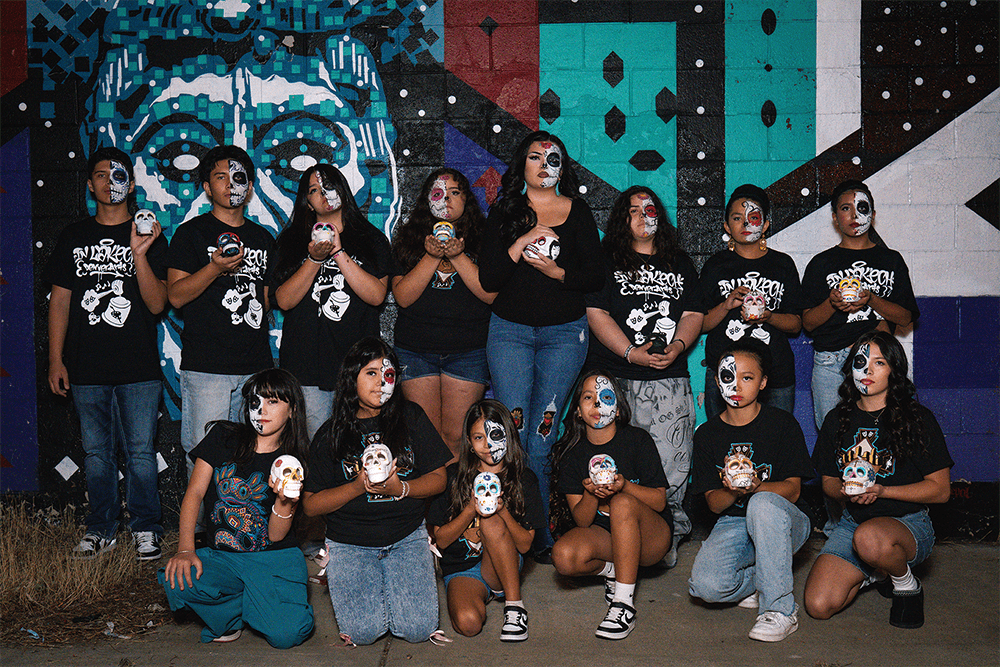
In Lak''ech began as a small pandemic-era pilot program. It now serves more than 100 students, many from Denver's Southwest neighborhoods. Credit: Courtesy In Lak'ech.

Toni Tresca
Toni Tresca is a Colorado-based arts reporter originally from Mineola, Texas, who writes about the evolving world of theater and culture—with a focus on the financial realities of making art, emerging forms, and leadership in the arts. He’s the Managing Editor of Bucket List Community Cafe, a contributor to Boulder Weekly, Denver Westword, and co-host of the OnStage Colorado Podcast and Such a Nightmare: Conversations about Horror. Currently pursuing an MBA and MA in Theatre & Performance Studies at CU Boulder, Toni brings both business insight and artistic depth to his reporting. We are happy to welcome him as our newest resident storyteller.














.png)


.png)


.jpg)
.png)


.png)
