


The BSF Conversation: Louise Martorano
July 14, 2026
time
Min read time

Many are the ways organizations can march into a city not their own with blueprints for transforming it. Often they arrive bearing approaches likely to alienate the folks on the ground, those who have been doing the work, navigating the civic, cultural, political roadblocks for years. More than a bit condescending, it’s a recipe for conflict. Thankfully, this is not how the Bay Area real estate organization Community Arts Stabilization Trust — or CAST — arrived in Denver last fall on its first foray into another city. And Louise Martorano has a lot to do with that, even though the former executive director of the Redline Contemporary Arts Center would deflect that observation and immediately shout out to the other local lights who have been working to address the area’s affordable space challenges.
During her 15-year tenure at Redline, Martorano became a cultural-space innovator. When Redline began its two-year residency for artists, it was clear that workspace issues were tethered to housing issues. In 2019, Redline launched the Satellite program (which aimed at growing an inventory of arts studio space for Colorado artists). Even before that successful undertaking, Martorano had started to think about artists’ spaces in practical, not merely programmatic, ways. Martorano had been part of Denver’s efforts to make artists’ DIY spaces safer after Oakland’s horrific Ghost Ship warehouse fire took the lives of\ 36 creatives in 2016. It’s fair to say that the origin of the buzz around CAST in Colorado leads back to Martorano being named the Colorado-headquartered national manager. The enthusiasm is grounded in trust: the CAST person was our person.
“I think CAST recognized that with Louise they have somebody who is within the sector, who recognized intimately the need, somebody who was able to bring that together with vision and strategy and care,” said Tariana Navas- Neives, deputy executive director at Denver Arts and Venues. “It was like soul matching. There was proof of concept. It was not just a dream.”
Talking about CAST and Martorano, CAST CEO Ken Ikeda echoes that sense of kismet. “It's this whole lived life that you get,” he said. “The pressure, the responsibilities and the newness of managing space, acquiring space — and she did all this in addition to being an executive director. Honestly, that was our immediate reaction to meeting [Louise} and learning about what she's doing and then to see it. ”
Sitting in a booth at a downtown coffee bar near the offices of Denver Arts and Venues (where her new basecamp is), Martorano jokes that it wasn’t really her resume but the over-laden key chain that accesses the many spaces she’s helped steward that cinched her interview with CAST and Ikeda.
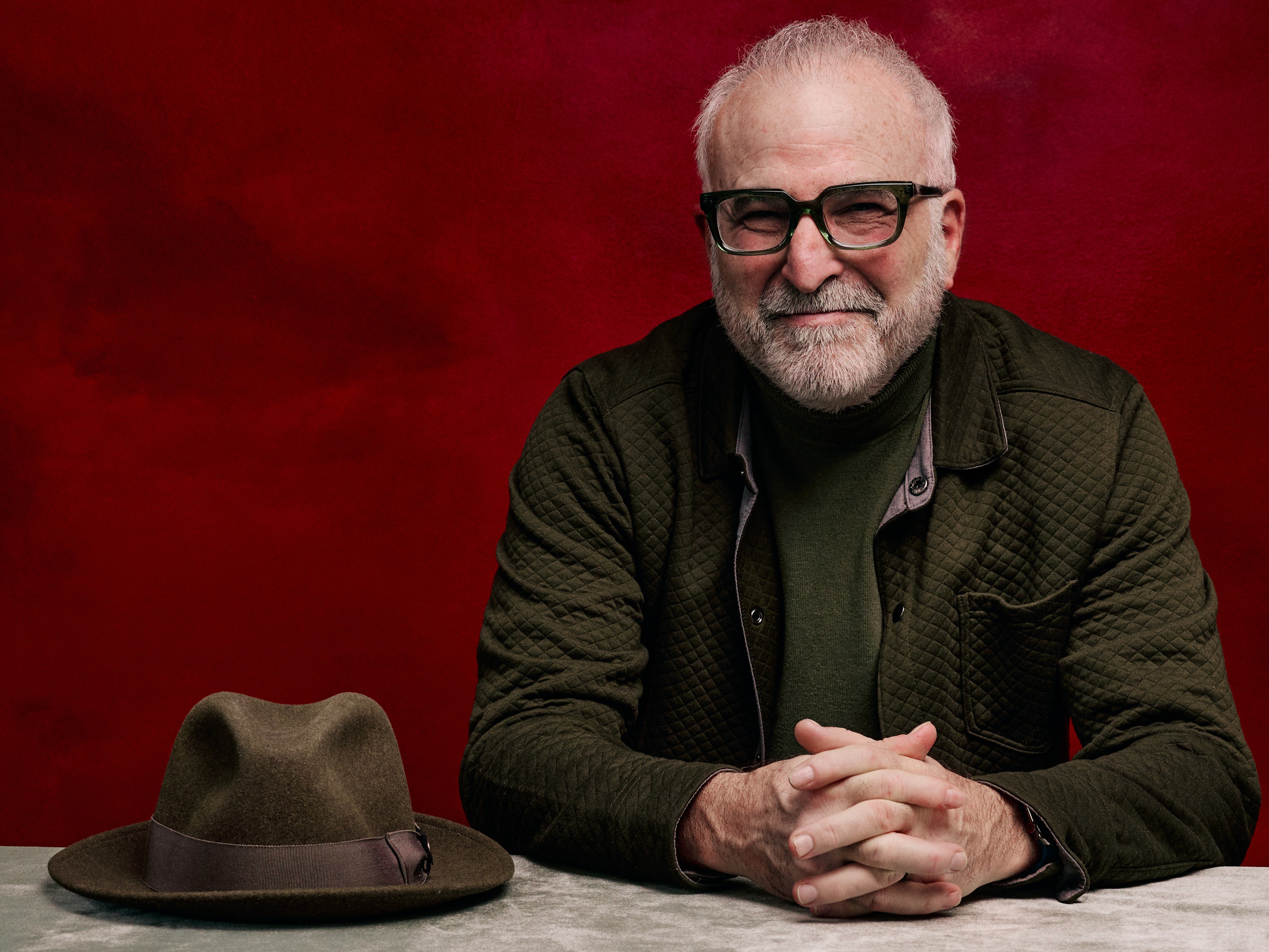
Martorano’s outsized stature as a civic force is tempered by a palpable humility. The dark-haired, twinkling- eyed leader smiles easily, laughs appreciatively; and she is happiest setting the stage for others, being the “yes” she likes to say. That glimmer to the way the Colorado native engages — call it kindness.
The Bonfils Stanton Livingston Fellow (2017) and currently a BSF board trustee has the confidence of her allies — the folks at Denver Arts and Venues, Stefka Fanchi, executive director of the affordable housing concern Elevation Community Land Trust, and others — but also of the area’s artists and arts organizations.
For Martoranos’s Redline departure, a group of artists made a goodbye video to Hall & Oates’s “You Make My Dreams Come True.” In it a woman sprints through a Denver alley, a cape flapping behind her with the word LOU emblazoned on it; an artist air guitars wildly in the waning light; and the celebrated textile artist Ana Maria Hernando, festive in a yellow boa, lip-syncs to the same jangling cover of the ‘80s hit.
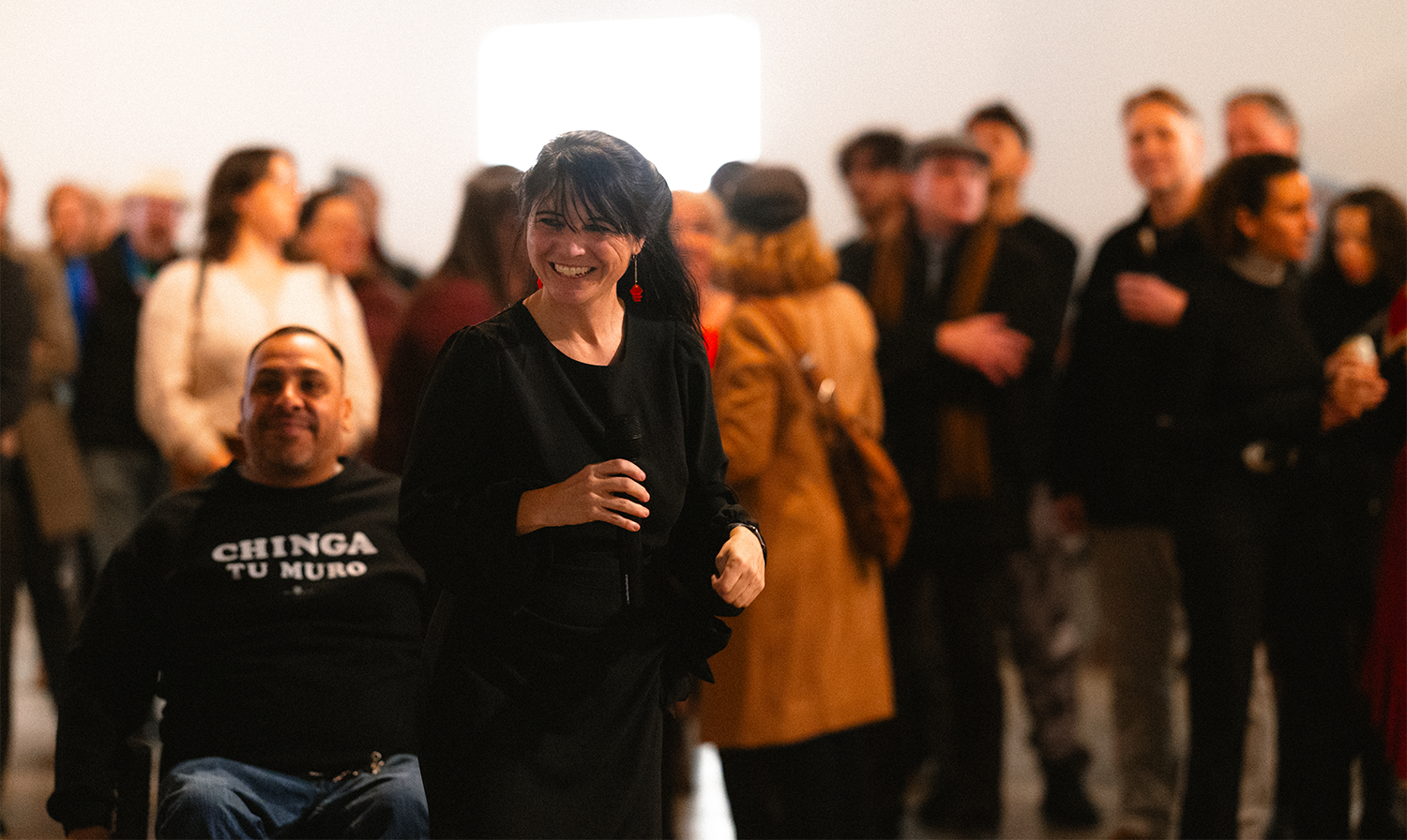
“She has made community. People are being inspired by what she's doing, and they are paying attention in other places”, said Hernando. “And, you know, when you can support your artists, you're bringing such abundance to a community.
“What she has done with Redline and what she can do now with CAST is essential and revolutionary too,” Hernando continued. “I think her incredible gift is how she sees the possibilities and not the blocks. When something is stuck or blocked, she loves to figure out the ways of making things flow and making things happen.”
In less than a year at it, CAST- Denver has announced two major projects: the purchase of the East Street School in the southern town of Trinidad, and the recently announced acquisition of a commercial space in downtown Denver, set to become a 6300-square-foot cultural hub that “will bring together affordable artist studios, a nonprofit gallery, a microcinema, and flexible space for exhibitions, screenings, performances, and public programming.” Making things happen with a sense of the societal and cultural transformation their visions can engender is why the Bonfils Stanton Foundation cherishes and supports local changemakers. Celebrating them is why Louise Martorano is the inaugural subject of the BSF Conversation.
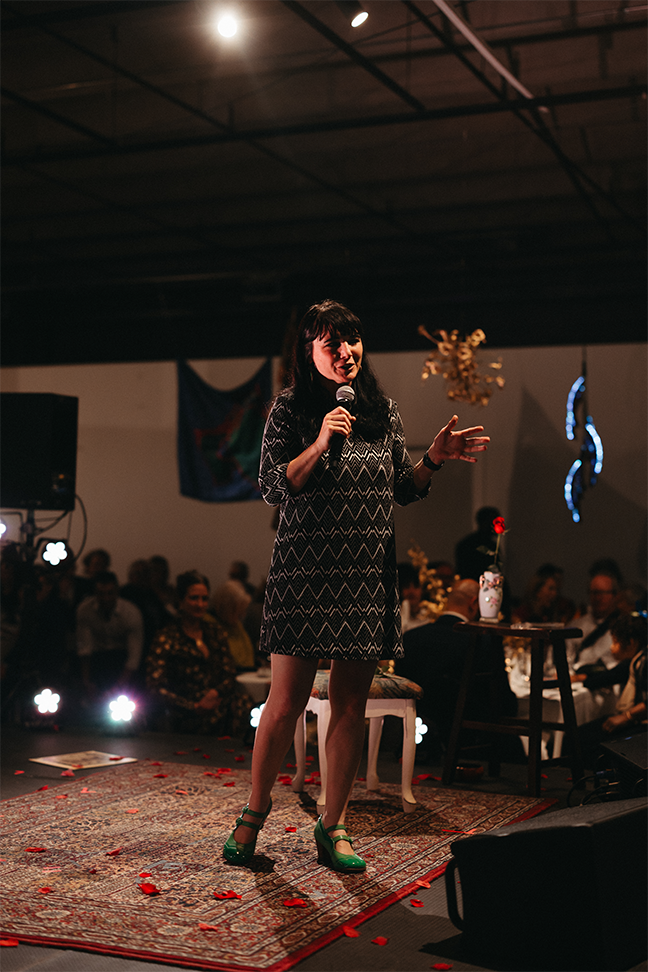
BSF: How did your time at the helm of Redline inform your journey around space?
Louise Martorano: One of the things I was seeing too often was artists leaving the two-year residency program and then not having a place to land even though they had caught momentum. At the same time, I was also receiving inquiries from cultural organizations that were trying to negotiate spaces or were losing their spaces. People need folks to call and to pick up the phone when they are at the intersection of crisis and opportunity. At Redline, I kept answering those calls and saying, “I don't know what I can do, but I can try to figure out something.” I kept following down that path of “yes.”
So, you were able to identify a need?
In the non-profit community, the artists community — especially for artists of color and leaders of color— the capacity is not there, the time is not there. And it’s because of structural reasons. Organizations need a little extra capacity, they need someone to help build the capital stack or help put the financing together or help put together a combined PRI for ready capital. When an artist shows up to negotiate with a real estate developer, they don't necessarily have the model and the history to point to. I was able to do the negotiation piece, which is where the capacity is really needed in Denver. Being able to bring my 15 years at Redline into the room showed that the models are possible. If I can leverage that to get artists in the door with the keys and me exiting, that's a fantastic formula. I've had this phrase in my head for a long time: If you don't see the model be the model.
It sounds like launching the Satellite program enabled a lot of learnings?
Martorano: With the Satellite program, we were onboarding two spaces per year. I realized at that clip, if I were I focusing on this work, we could recenter the culture that had been pushed out.
Was there a particular entry point for deepening your understanding of space?
It really grew from forever ago. The first time I was walking into buildings was right after Ghost Ship in Oakland when we launched the safe creative space program with Denver Arts and Venues and Community Planning and Development. I was walking into these artist spaces and theater spaces across Denver, and it was clear that permitting, building code or life-safety issues are not something that you learn unless you're put in that situation. Yet, it is such important information for all of us to be able to access quickly when we need it.
BSF: When the building in the Five Points neighborhood was donated to Redline, that must have been a gamechanger.
Martorano What a gift that was and why it was so important to continuously be generous in how we extended the space to others. I always felt, what if I wasn't looking over my shoulder in terms of rent increases? Still, it’s just 22000 square feet in a city that is much bigger. People need access to space but not for activation, for sustained work and, therefore, sustained change.
Too often “activation” is a gentrification-coded word.
I just want to run myself through every time I hear that word because it does not recognize the careers, the livelihoods, the human need around the work. Why would you think that a single moment in time could actually support the need of an artist? I'm not saying there aren’t moments for project-based work that can go up and come down, but the concept so often doesn't recognize the labor that goes into the work. It takes so much more to just continuously activate versus sustain. Why not create opportunity, stabilization and sustainability within our approach?
Stability, security, sustainability are the things we should be working on as a city, as a nation…
As opposed to throwing enormous amounts of resources at temporary solutions. It feels so inefficient.
How did CAST come into the picture?
During my Livingston Fellowship in 2017, I wrote that I wanted to go look at different organizations that were working on affordability for artists and look at their models for arts and culture and spaces.
Who was doing interesting work?
I went out to visit Artspace in Minneapolis. There was also this amazing model called Open Book out there, which I adore and always bring into conversations. I actually visited CAST during the pandemic. Even prior to that, in 2013, Gary [Steuer, then executive director of BSF] had tried to start a conversation about CAST.
Can you talk more about Redline’s satellite program?
The Satellite initiative came out of the Livingston Fellowship. When I formalized the program, CAST was my high watermark because CAST is about space ownership. And I have always felt that if you can own your space, you can own your future. Sometimes ownership can destroy you because it's expensive and it's not always negotiated well, but philosophically CAST has it right. They were a stabilizing and securing force on the road to ownership. So, they were always in my head.
And then…?
While trying to get to that high water mark, I was also trying on all these different applications based on what the partners were willing to do— do they want to do a master lease? Do they want me to do a license? Do they want me to do a sublease? Do they want to do an MOU? — thinking that I would ultimately arrive on the right format that could be scaled. With the Burrell project, we did an LLC for purchase with nine artists. That closed last year. It was a wonderful moment. I'd gone to Gates and to Bonfils and said, I want to keep fundraising for these programs because of how productive it’s being. Now Los Fantasmas and Alto Gallery have new homes. Access Gallery has an Englewood space now, Art Students League is opening their Englewood space. Just the productivity of it was like, “I think this is working.” And that's when Bonfils said, let's go out and visit CAST one more time. That was last November. And then we invited Ken [Ikeda] to come out to Denver. I think the interview was him seeing my keychain.
Would you have ever guessed you’d become a real estate impresario?
No. [ laughter.] But I do feel the throughline has been in asking, How I can continue to show up for artists and the arts and culture community? Whether it's a poetry reading, a theater production, music or creating a body of work to exhibit, the arts are anchored in bringing community together. And you gotta do that in space. So, yeah, it was just this weird masochistic side of me that had to go towards the greatest need. And as the executive director of a contemporary arts center, you get folded in this weird way to being the judge and jury of people's ideas. I never wanted to be between people and their ideas. I only wanted to be the accomplice to the ideas.
Speaking of accomplices, who are your local allies in this work?
Stefka Fanchi [Elevation Community Land Trust] and Jeff Shanahan [Shanahan Development]. I started working with those two on the Burrell. I would call out Pennrose Foundation and the work that they did when we did the Nest56 space off Wewatta, which is for youth transitioning out of homelessness. They are working on a senior center in Phoenix that they want me to help with.
The dance of the local and regional, the national and even the global is so vital to the arts.
Artists’ careers thrive when they go beyond their zip code. That's what's exciting about this work being national in scope. I am interested in making sure to be in dialogue with different models that could be a benefit. Let's take this city zoning and code from Oakland and bring it here to Denver so that we can share it with Austin and make sure the artists in New York are also getting the win.
Remind us, where did you grow up?
I always say I'm hopelessly local because I was born at Rose and grew up in Castle Rock. I’ve done just about every zip code in Colorado. The Louise Transit Authority, the LTA, has been true to my form. I feel guilty sometimes about not having left Colorado, but the ecosystem here has always been so collaborative and not competitive. More like, how can we help each other?
You're the child of two pediatricians. Their resumes would not necessarily suggest your trajectory. I wonder if they thought that as well?
Yeah, they didn't know what to do with me, I think I have the work ethic of an emergency room pediatrician doctor and none of the desire to go into that field.
Wait, emergency room?
My father [who died in 2020] was in pediatric cardiology.
What's his name?
It was Francis, but he went by Frank. I remember Dean Prina [a local pediatrician and arts champion] telling me “Your father was so interesting because when we didn't have the solution, he was able to give us a solution towards pediatric emergency care that was not available to us in the primary care context.” In some ways that kind of urgency lives in my soul — but in a different application.
See a model, be a model?
Yes. My father never said “no,” to anyone. I live that. And, I have to say the national work and the work in Colorado, does at times feel like emergency dispatch because we are living within a climate of crisis in terms of infrastructure and real estate. [AG: The safe occupancy program invited me not only to go into buildings for the first time, but also to develop a list of good souls who had expertise. It was like pro bono structural engineers, electricians, permitting advice. They all showed up to all these cultural organizations with me to figure out how we could get them permitted and secure in their spaces. We were building a bench of legal, financial, real estate, governance, general contractors and the like. So that nonprofit leaders don't have to make 20 calls. They can make one call, and we can dispatch the bench accordingly.]
So, when did you get attracted to culture and the arts?
When I was in high school, I walked into this classroom that was team taught by Mr. King and Mr. Wood. They had taken out all the desks and put couches in a circle, and they created the gates of hell to Dante's Inferno as the door into the class. They just transformed the classroom experience. That was a fundamental moment. I was like, okay, there's something going on here. When I went to CU Boulder for my undergraduate, I ultimately landed in humanities and the arts because I realized I was best as a generalist. The humanities were that least specialized opportunity for me to follow every interest I had and have a passport to do so. If I wanted to take Stan Brakhage’s film classes. I could.
Classes with Brakhage? How cool.
It was amazing. Though I took most classes with his mentee, Phil Solomon. But I used to wait on Stan when I was working in record stores in Boulder. I got a job before I even started my first day of classes and I worked at record stores the entire time I was up in Boulder. What was fantastic is that Stan would come in and buy classical music. Talk about a breeding ground for nonprofit arts. Not a single day is the same. As much as it can be tiring, I can't get up and do the same thing every day and the arts never asked that of me.
So, record store veteran, what’s your go-to record or performer?
I like so many. When you spend so much time there’s not a genre left untouched. But I think the perfect Sunday morning is waking up with Coleman Hawkins. And that is just a wonderful, cool jazz record. It's like Coltrane's Ballads, Miles Davis’s Sketches of Spain. But then I also like…I could go down the road of every genre, something I will spare you.
Oh no, don't spare us.
So, I did once drive from Austin to Dallas to see Tom Waits.
That must have been special.
Louise Yeah, that was very special
Do you have a most memorable Red Rocks show?
Louise Most memorable Red Rocks show….I do feel that with Bjork, the mothership was going to come down and take her off to the next universe.
Were you there substance free? This is Colorado.
You actually don't need anything. You are transported. The Flaming Lips was pretty cool, too, for that similar experience. I saw Neil Young at Red Rocks, but he was super cranky. But he's always cranky. [laughs] I do love that music catalogs our life in such a wonderful way. My cat's named after Eno.
Is there a book that you go to often?
Nick Cave published these conversations he had with journalist Sean O’Hagan called Faith, Hope and Carnage. In it he talks about the loss of his son and everything. He also talks about devotion. How he described the concept of devotion in his work was something that I just really related to. That's what the work has always been to me. It's been really nothing other than the devotion to being able to contribute to a better reality than we're in, you know?

Lisa Kennedy
Lisa Kennedy writes on popular culture among other topics – and has for more than four decades. She was film critic for the Denver Post and later its theater critic. She has been published in the New York Times, Alta magazine, Essence, American Theatre and Variety, among others. She currently conducts nonfiction courses at Lighthouse Writers Workshop and coaches writing. She lives in Denver - the city where she was raised - with her spouse, Becky, and their dogs Jax & Hank.







.png)


.png)


.jpg)
.png)


.png)
