


Gleaming Darkly
July 6, 2026
time
Min read time
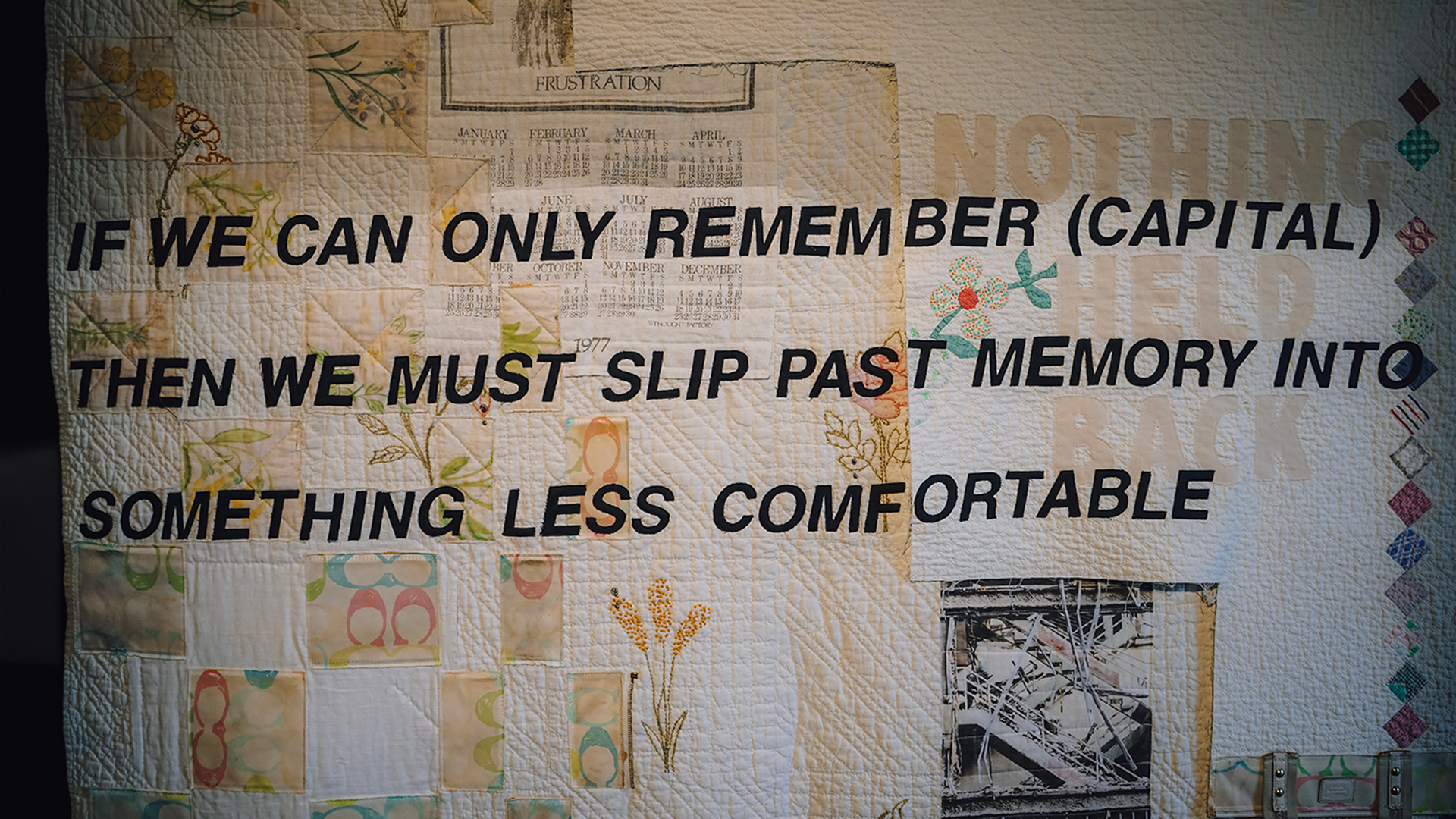
In 1992, the Detroit techno duo Drexciya wove a speculative Afrofuturist world with a founding tale across a series of records. In that myth the pregnant enslaved women thrown overboard during the Middle Passage did not die. They adapted. Their unborn children grew gills, built technologically advanced civilizations, and survived beneath the Atlantic in a kingdom called Drexciya. It is fiction, but it is fiction that does serious work — transforming one of history's most unthinkable erasures into something that, against all odds, looks like survival.
When Drexciya’s bold mythos found the artist Sierra Jeter, it didn't feel like discovery so much as a revelation. For her, James Stinson and Gerald Donald’s track Deep Sea Dweller became the blueprint for her first curatorial effort, Drexciya: Into the Deep. "So much of my work is about honoring the ancestors and those who came before me," Jeter told me earlier this year. It's no shock that the artist’s — whose practice spans photography, videography, acrylic pouring, and storytelling — first curatorial project reaches toward the dead.
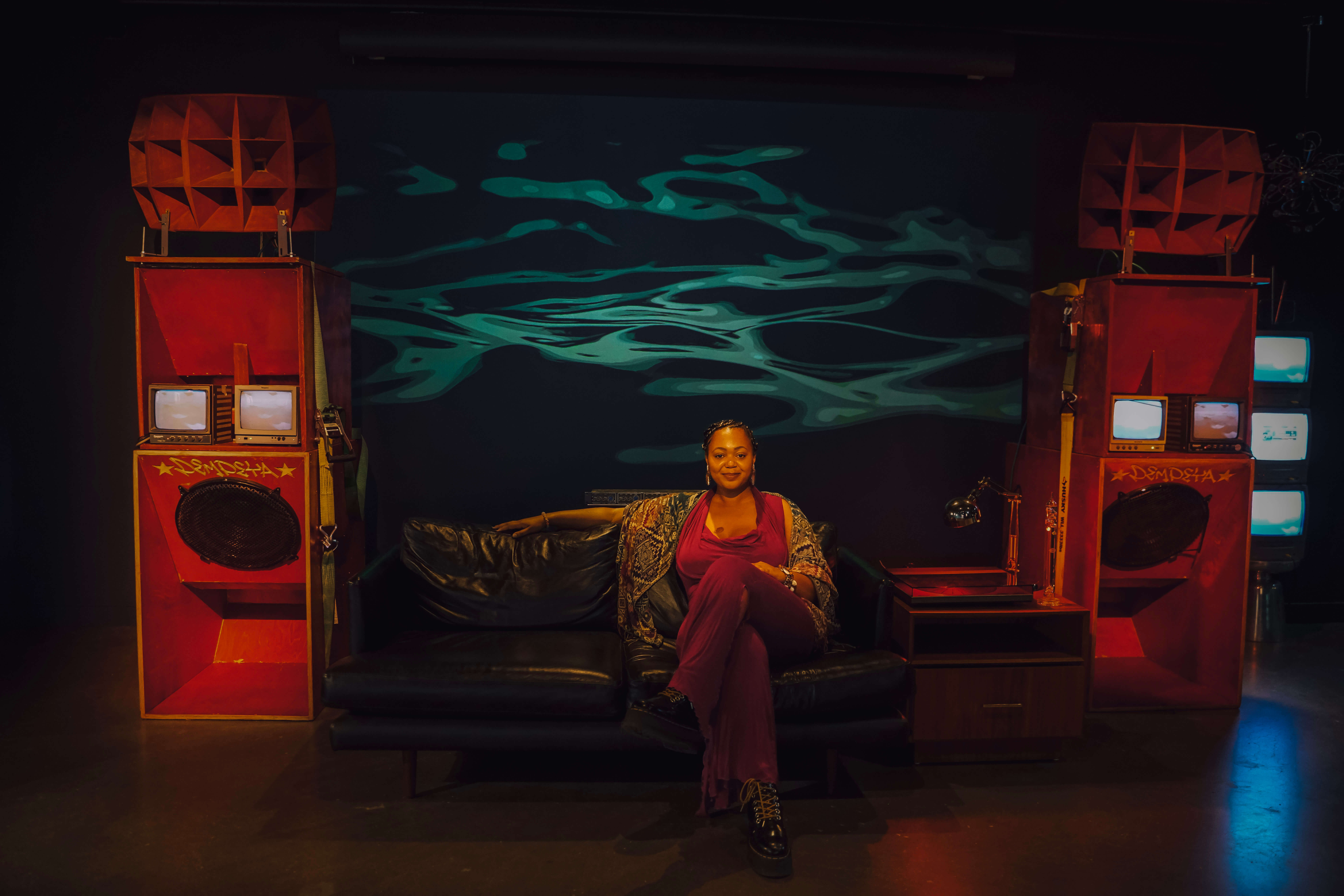
Drexciya: Into the Deep moves through underwater photography and immersive mixed-media installations to bring that mythology into contact with a truth that should be impossible to ignore and has somehow been ignored anyway: the Atlantic Ocean is the largest unmarked grave produced by the slave trade, holding the remains of an estimated 1.8 million Africans who perished during the Middle Passage. No international memorial exists for these lost lives. Jeter's show doesn't propose to be one — but it asks what it might feel like if we let ourselves go down there and look.
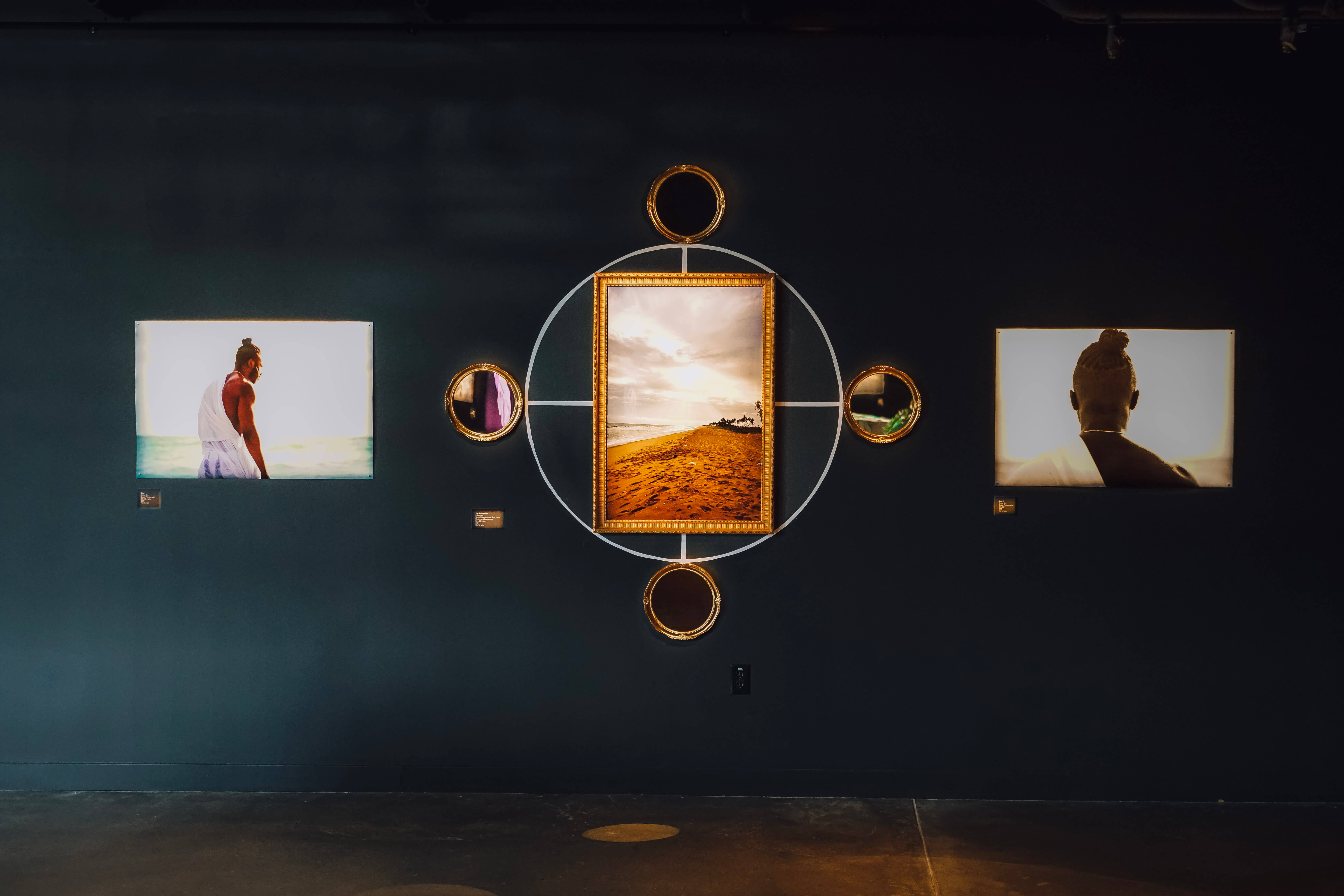
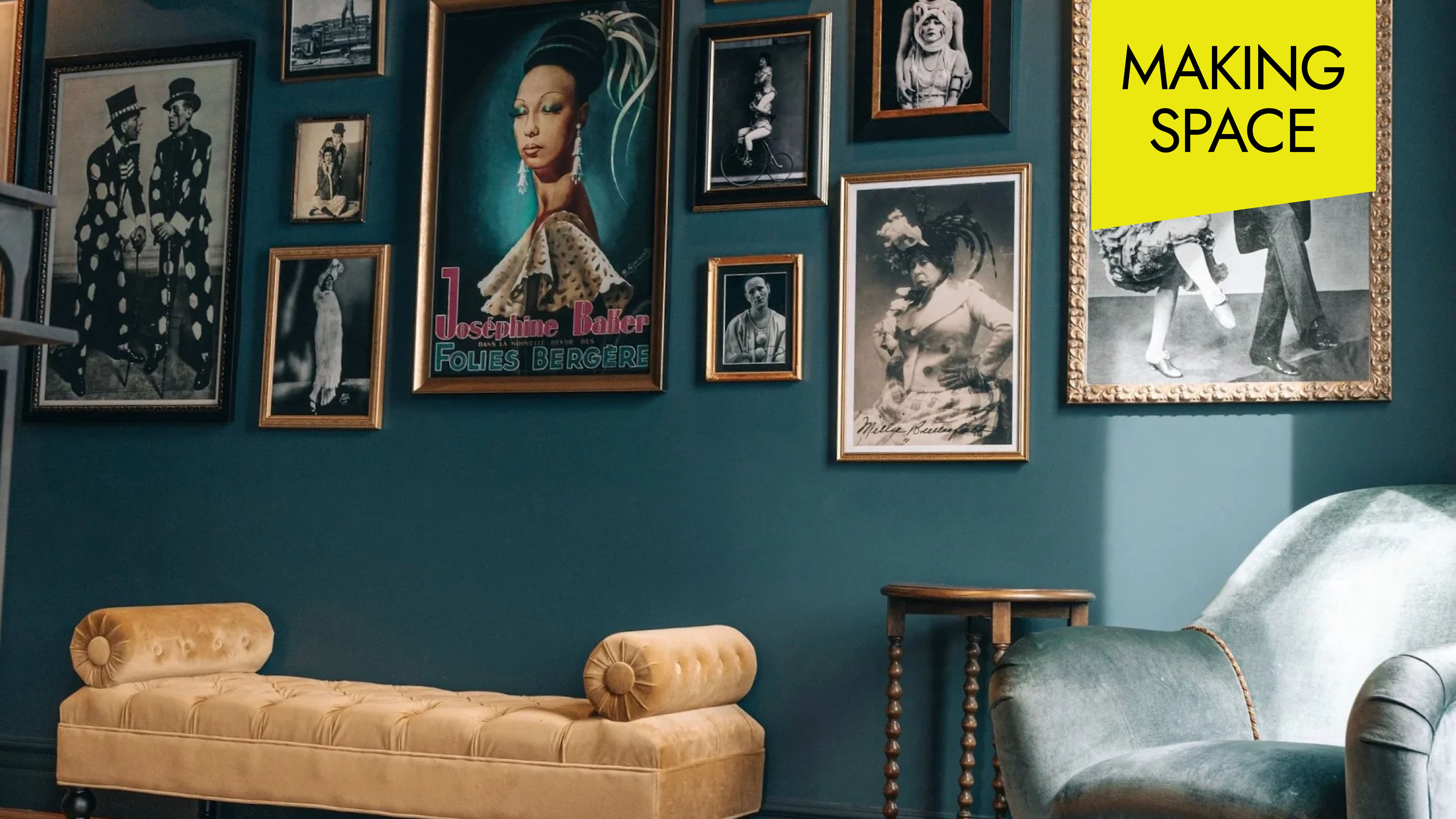
Having launched Union Hall's 2026 installment of Rough Gems in March, the exhibition now lives online. The downtown Denver gallery's annual curatorial training program, in its sixth year, continues through the end of 2026; its current exhibition, Felicity Wong's Wearing, Wearing, runs through August 8.
Rough Gems was built as a reaction to Denver’s artistic landscape: While there were opportunities for emerging artists, emerging curators had almost nowhere to turn. Each year the program selects three curators, grants them full access to Union Hall's facilities, and provides mentorship, marketing support, and equitable pay — stipends that meet or exceed W.A.G.E. guidelines, the wage standards most institutions treat as aspirational.
Since 2020, 64 percent of Rough Gems budding curators have identified as LGBTQIA2+, and 38 percent as BIPOC or Latinx. This isn’t by accident; the program was designed to find the people who had been quietly locked out of exhibition-making and hand them the keys.
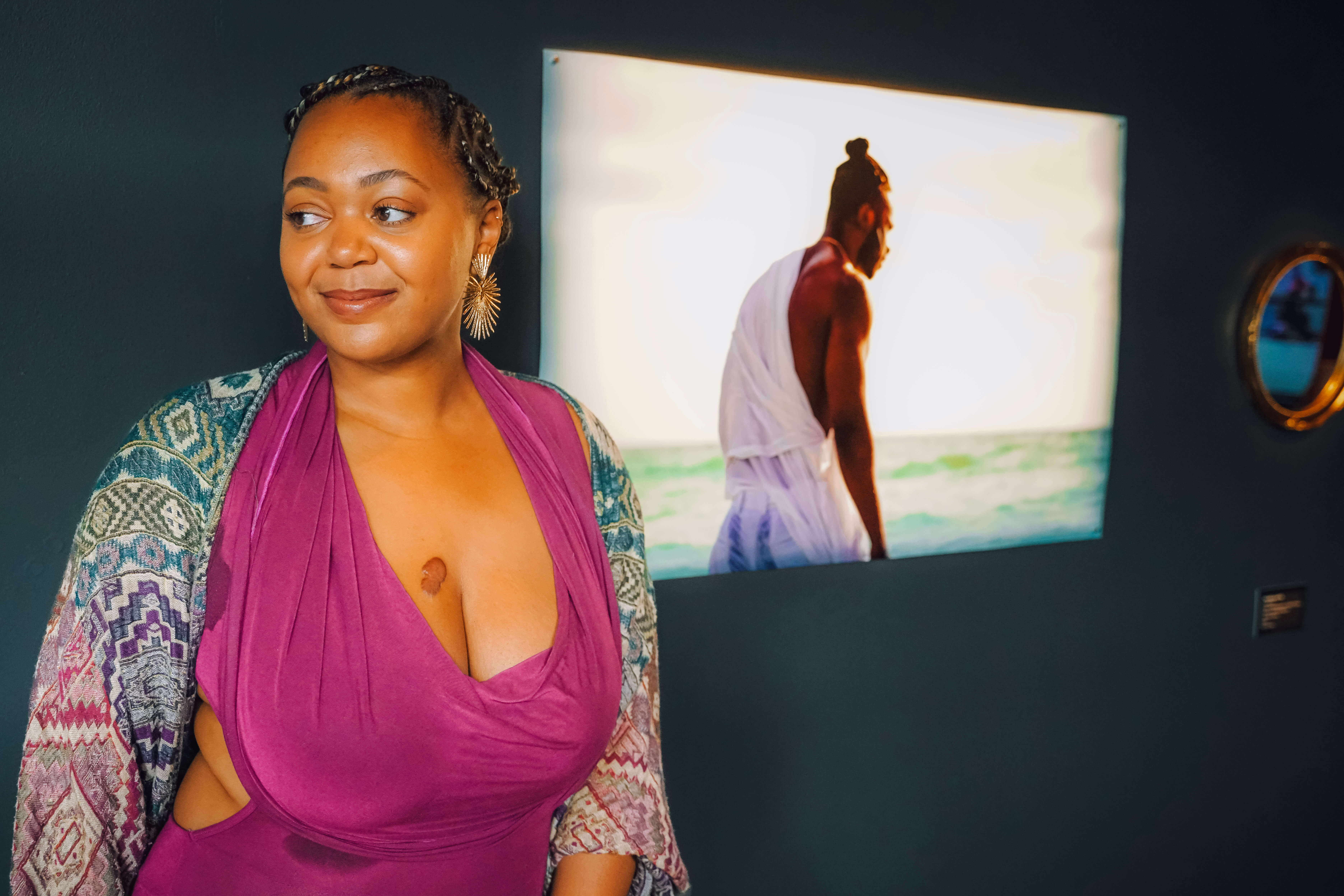
From the start, Rough Gems pushed its guest curators toward ambition. George P. Perez turned Union Hall itself into the artwork through absurd arrangements of domestic materials. Robert Martin transformed the gallery into a cathedral, hanging works above eye level and spotlighting pieces at corridor ends. Curators Jenny Nagashima, Shawn C. Simmons, and Rae Richards followed, shaping shows that probed the body, queer ecology, and ancestral craft. Each exhibit arrived with its own aesthetic logic and political stakes — which is precisely the point.
Jeter found in Rough Gems a structure expansive enough to hold what she was trying to do — to heal what has been silenced, to honor those who came before, to send something back down into the water.
Which is how Wong found herself building a show around dying clothes.
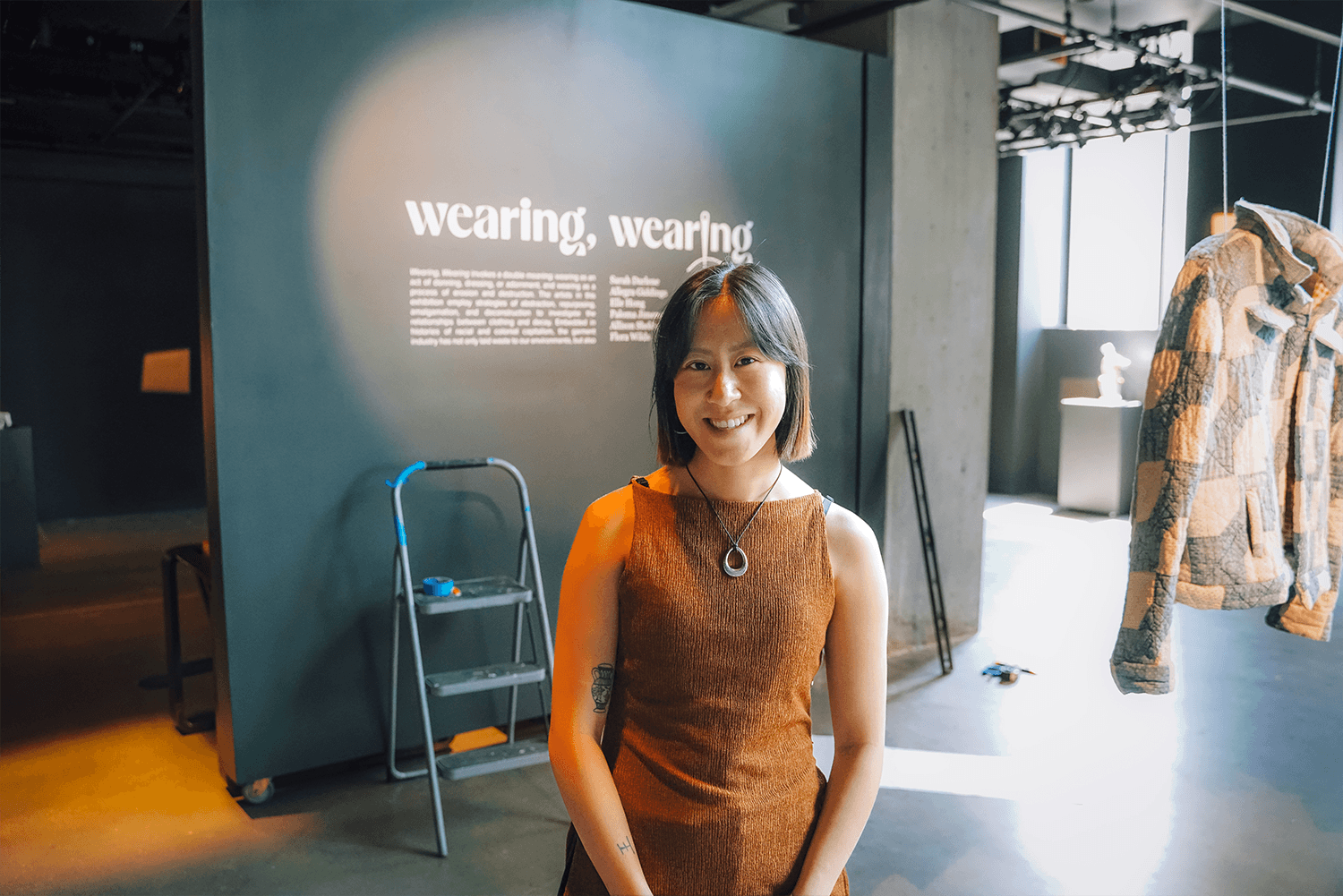
Wong recently completed her master's degree in art history at the University of Colorado Boulder, researching contemporary Asian-American and Southeast Asian art with a focus on the politics of everyday materiality. Her thesis centered on Shangzhai Lyric, a New York-based collective that gathers counterfeit "Made in China" garments sold on Canal Street — clothes marked by misspellings and mistranslations — and reads the text not as errors but as a single continuous poem. Wong’s project crystallized a frustration she had long carried with fashion discourse that fixates on couture and individual genius while sidestepping the political dimensions of how clothes are actually made, and what happens when we're done with them.
"I think a lot of existing fashion exhibitions are really focused on haute couture in a way that feels almost depoliticized," she told me during installation week, as she carefully peeled vinyl from the gallery wall — her first time doing it. "I wanted to push against that."
For Wearing, Wearing, Wong gathered six artists who approach garments the way a coroner approaches a body: with curiosity about what the manner of death reveals. (The artists are: Sarah Darlene, Allegra Giddings, Elle Hong, Paloma Jimenez, Allison Sheldon and Flora Wilds). The title is deliberate: wearing as in dressing, but also wearing as in wearing thin, wearing out. Wong pushes against easy dichotomies — slow versus fast, handmade versus mass-produced. "Everything that is mass-produced is handmade," she said. "There are laborers behind the clothes, whether we want to humanize them or not.”
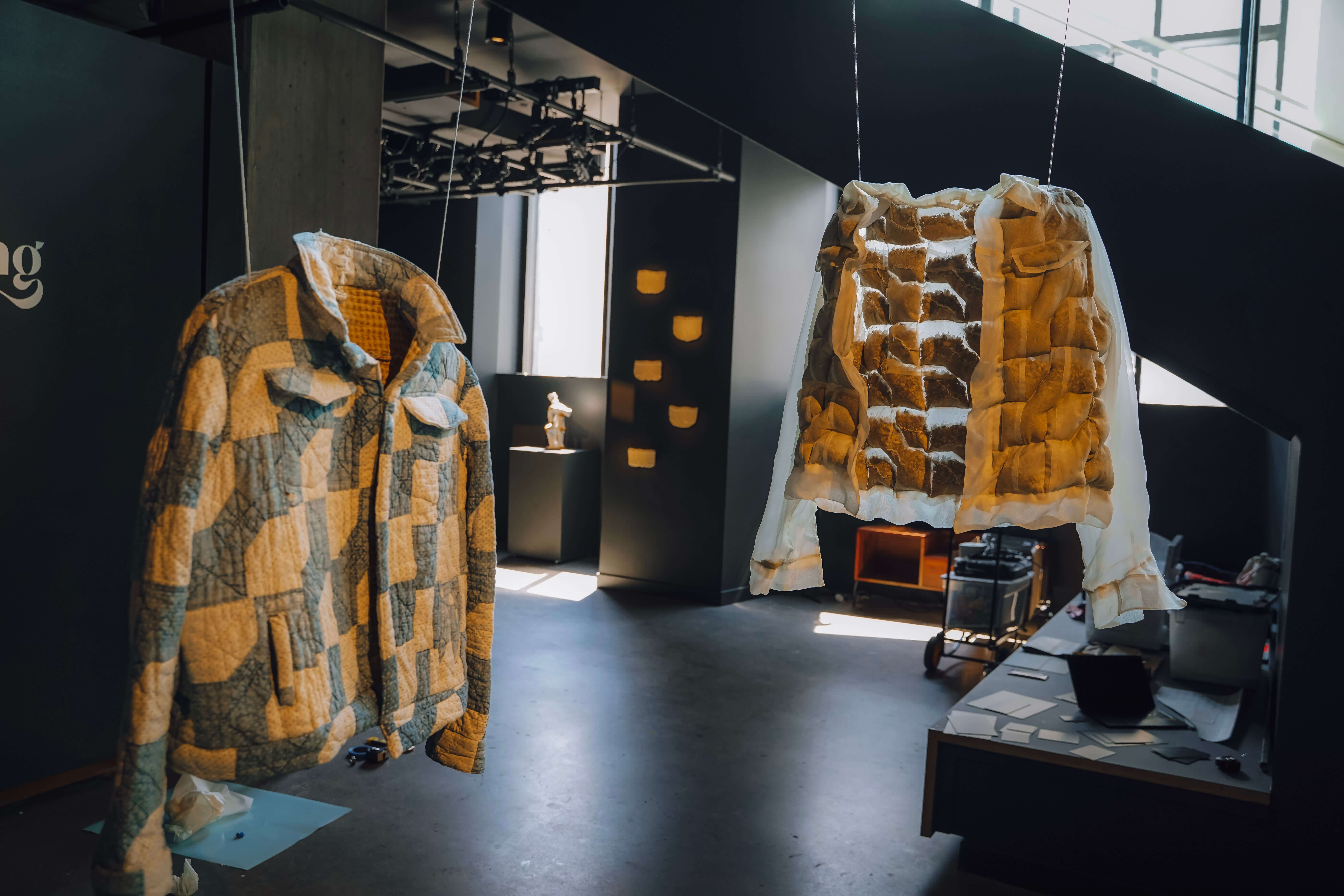
She came to the project having spent two years thinking about art in the abstract. Rough Gems pulled her back into the world. "A good curator is first and foremost rooted in their community," she said. "Every conversation with these artists has strengthened or challenged — and ultimately informed — my exhibition concept."
What Jeter and Wong share is a conviction that art can hold what history prefers to discard. Rough Gems gave them the space, the support, and the keys. The rest is on the walls.

Manuel Aragon
Manuel Aragon, a distinguished Latinx filmmaker and writer from Denver, illuminates the Northside's vibrant community through his speculative fiction collection, Norteñas, and critically acclaimed web series, Welcome to the Northside. His work, recognized by nominations such as the 2020 PEN/Robert J. Dau Short Story Prize and features on platforms like MTV, showcases a unique blend of storytelling and social commentary.


















.png)


.png)


.jpg)
.png)


.png)
