


What Remains: Two Artists, One Homeland
August 13, 2026
time
Min read time
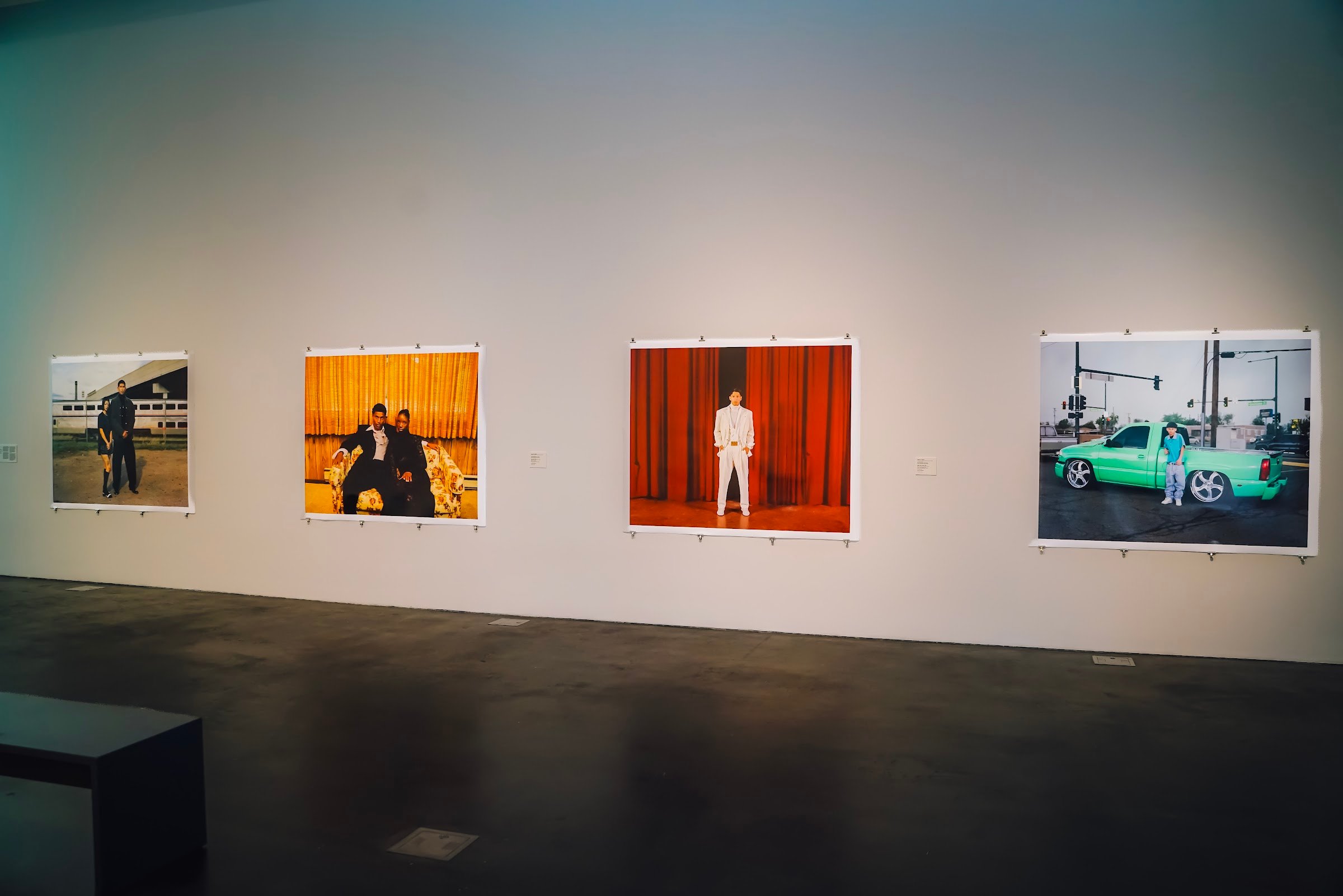
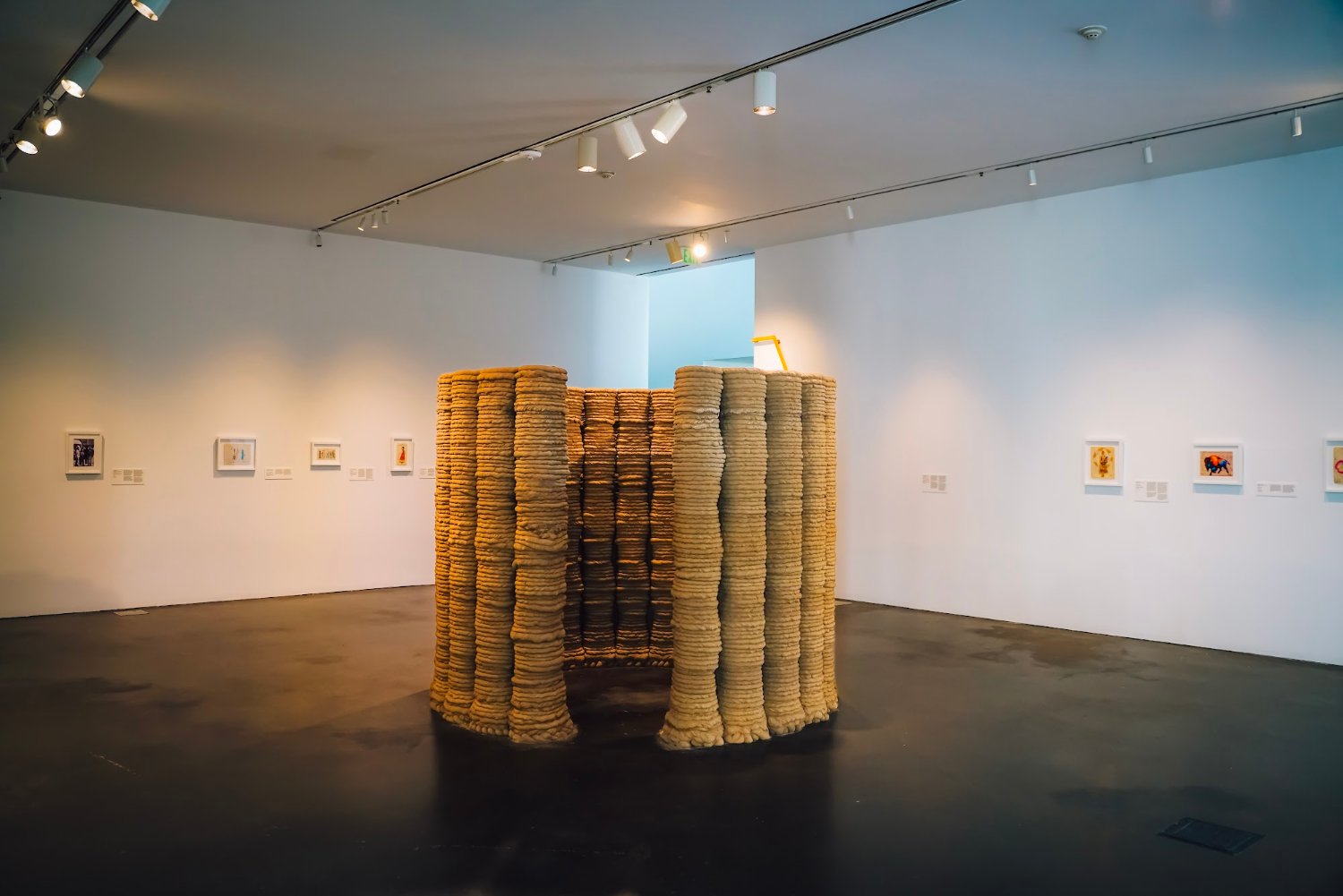
One wall in “Colorado Currents,” the Museum of Contemporary Art’s new exhibition, displays ledger pages once used to track a settler’s debts. Drawings of young women rendered in bright, almost electric color overlay the old accounting grid — the same paper Cheyenne artists began adapting some hundred and fifty years ago, when there was little else at hand to draw on. Another wall, one floor up, holds large-scale portraits of young men and women dressed in Hermès and Phoebe Philo, captured on seemingly nondescript Denver streets. The aesthetic techniques themselves try to encapsulate 150 years of memories: one born of nineteenth-century necessity, the other of the fluid, high-gloss vocabulary of contemporary fashion photography. And yet, in the exhibition “Colorado Currents,” it becomes clear that both walls — and the artists behind them — are having the same conversation about what it means to be a Coloradoan.
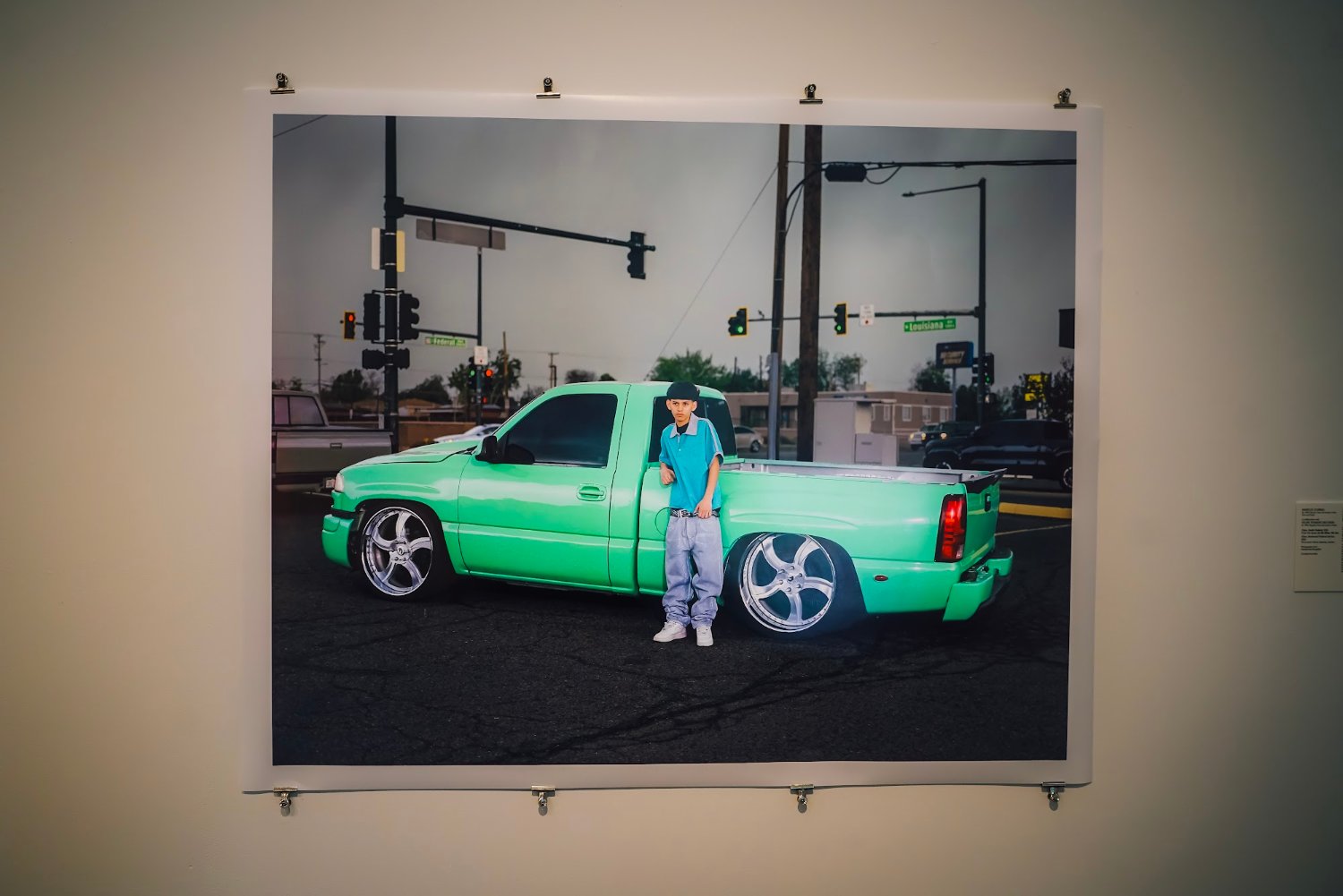
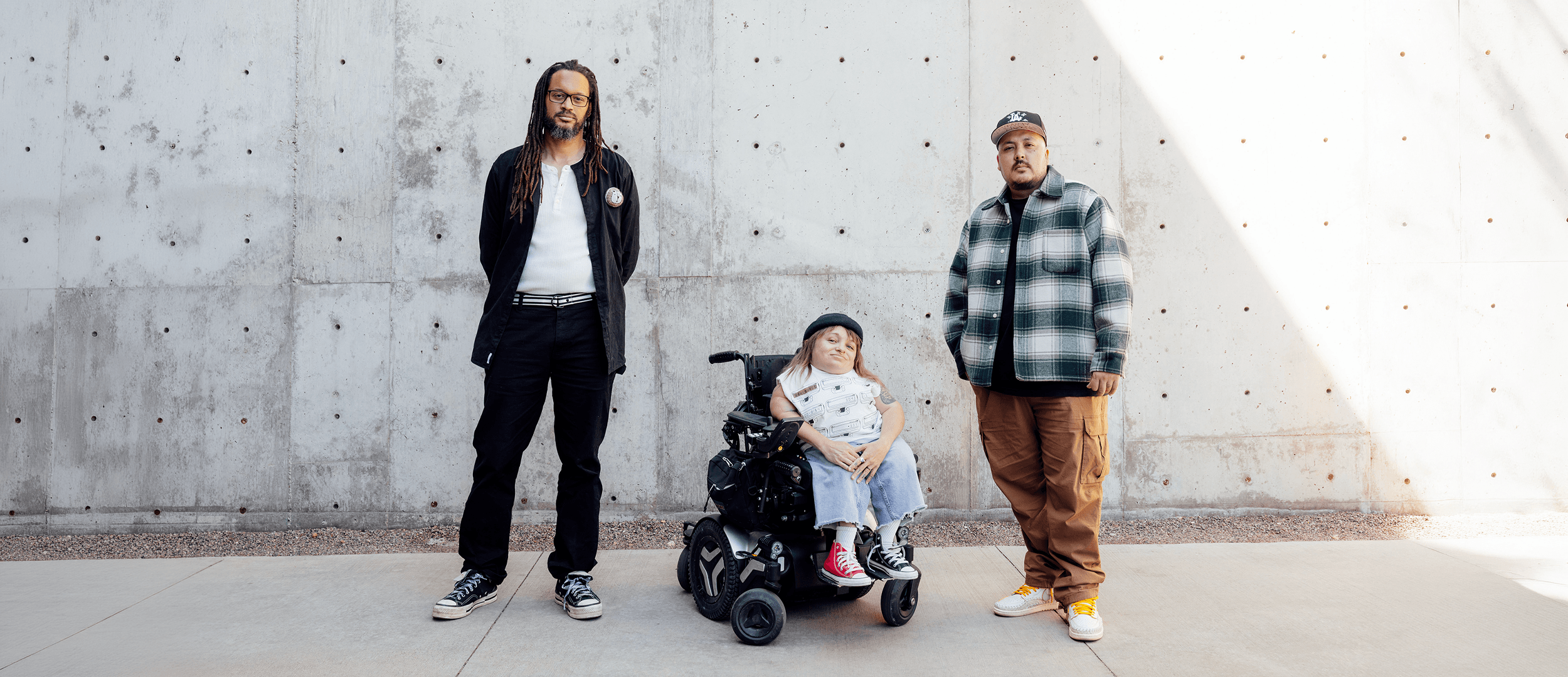
The portraits belong to Marcus Correa, a Denver-born, New York-based stylist whose series “As We Were, We Are” — made with the Paris-based photographer Felipe Romero Beltrán — runs like a spine through the sprawling new survey of the state at 150. The ledger drawings are the work of Halcyon Levi. A recent graduate of the University of Denver, Levi is also the first descendant of the Sand Creek Massacre to graduate from the university, one founded by the governor that ordered the 1864 slaughter. Alongside her father, the artist George Curtis Levi, she is showing work in a form their Cheyenne ancestors adapted a century and a half ago, coaxing art out of the very paper their dispossession had been itemized upon.
Both Halcyon and Marcus, are making, in their separate registers, a single unhurried argument: that the people who have long called this state home are not relics arranged for a museum’s benefit, but authors still very much at work in the present.
The show’s curators, Miranda Lash and Leilani Lynch, organized their eighteen months of studio visits for this exhibition around a single question: How does your work understand where Colorado is now, and where it might be going? Nearly fifty of the works on view were made expressly for the occasion, rather than pulled from artists’ existing bodies of work. “What we do best is support the creation of new work,” Lash said. That forward lean made the anniversary itself feel “not celebratory for everyone,” she allowed — a tension the exhibition doesn’t resolve so much as live and breathe inside, inviting the audience to sit with these unresolved emotions.
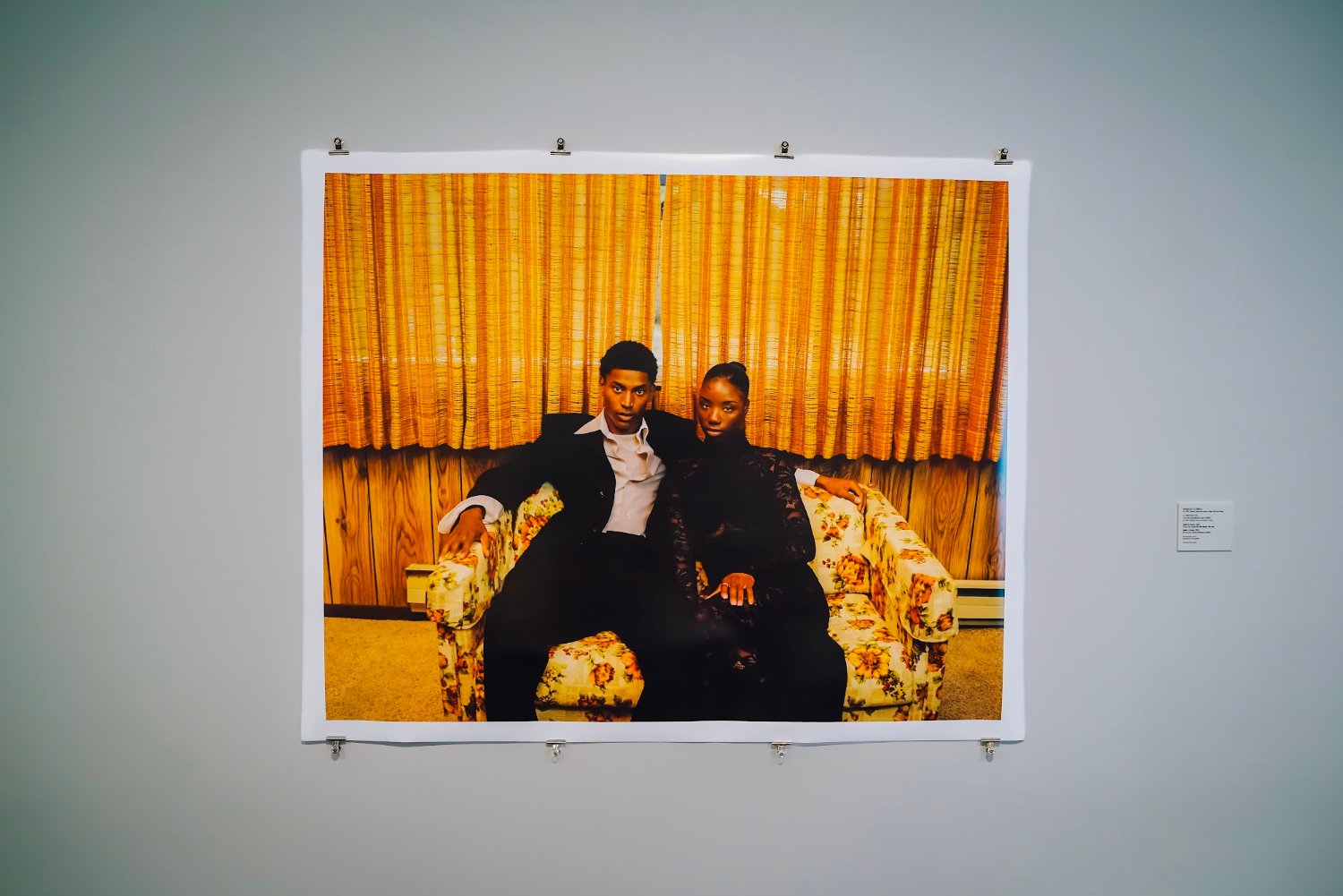
Lash knew of Correa through fashion, struck by an artist who moved, unbothered, between being — as she put it — a cholo and fluent in the vocabulary of haute couture. “Marcus’ work combines in elements of high fashion and Chicano, cholo culture to create something new and fresh.” Over coffee he’d confided in her a thought that guided his contributions: that almost no one outside the state seemed to register that Colorado has its own Chicano culture, distinct and largely unsung. “No one represents the Northside more than Marcus does,” Lash said.
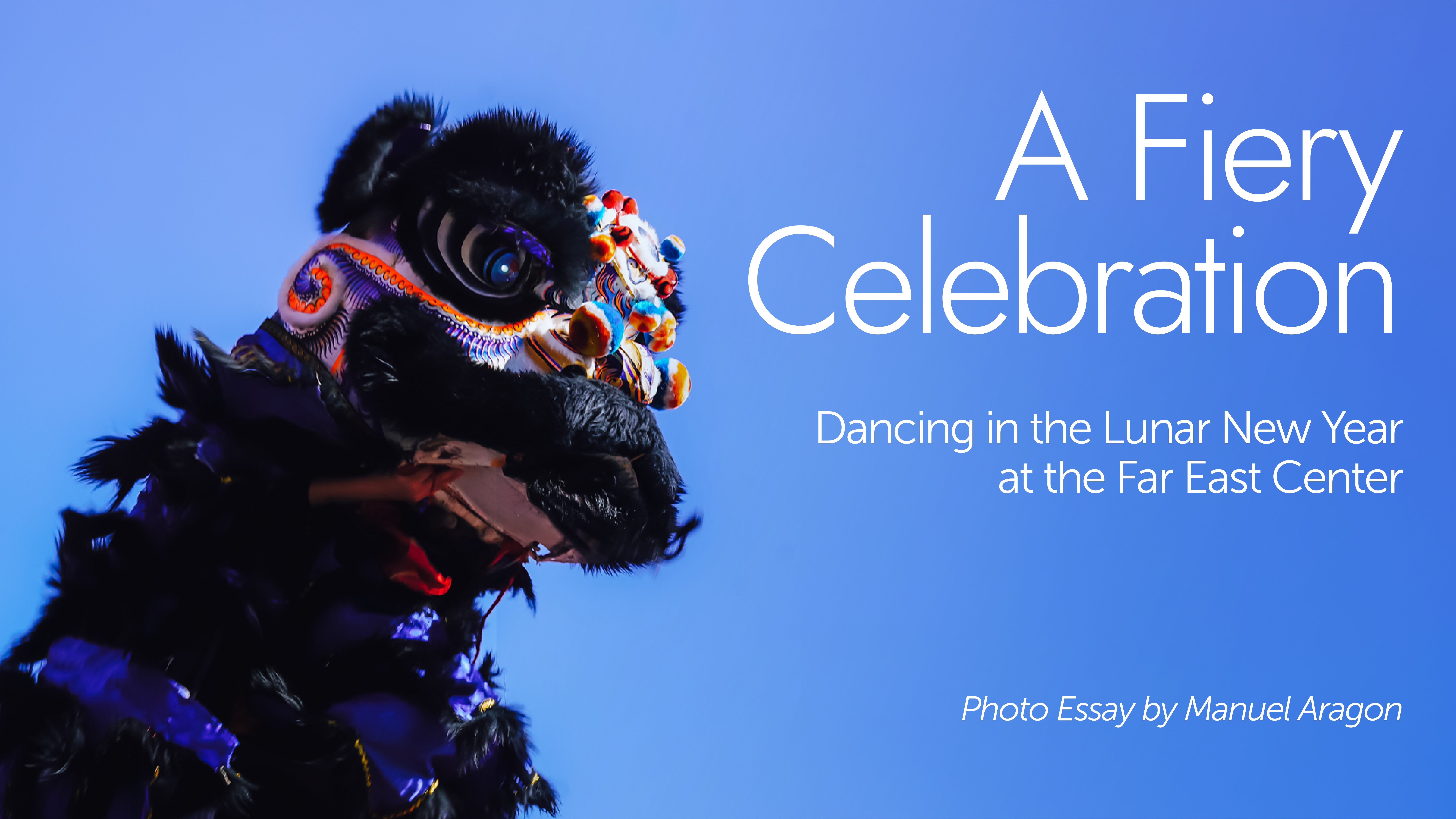
She asked him to build a shoot entirely around Denver, and he spent months narrowing the map to what mattered — the Far East Center, the Aztlan Theatre, the bungalow blocks he grew up wandering — chosen, he’s said, because they felt distinctly Denver rather than a stand-in for the West in general.
“I’ve held on to a lot of anger about what’s happened to my neighborhood,” Correa said, something rueful in the admission about the impacts of gentrification on the Northside and Westside that he grew up in. “But I’d never really seen what’s going on now through an optimistic lens.” He chose Beltrán, he said, precisely because his collaborator arrived with no history in the city to color the frame. “He’s seeing it for the first time, through a completely fresh eye,” Correa said. This decision and their collaboration informed what Correa left out of the work and mattered as much as what he let in. “I want a kid from Denver to walk in and just be like, ‘yep, that’s Denver.’”
Levi’s path to the exhibition was even more untraditional. Lash first encountered Halcyon’s father George Levi’s art through the Denver Art Museum, its imagery shadowed by the old treaty language promising the land would remain Cheyenne “as long as the grass grows and the water flows” — a promise broken almost before the ink had dried. His daughter came to the same practice, if by a different route. In 2021, a museum visit with her father, George turned up a Cheyenne cradleboard tucked among the archives; a conversation afterward recast her own culture as something she might study, formally, from within. “I realized anthropology was something I could pursue academically,” she said. She carries her father’s practice forward, if at a different pitch — his ledger work holds close to tradition; hers reaches for colors that are bolder, images less realistic, often focused on women as her subjects, as opposed to the men who make up the work of her father. The Levis challenged Lash and Lynch and the boundaries of whose art geographically fell within the boundaries of Colorado. “Halcyon and her father made us reconsider what is and isn’t Colorado,” Lash said.
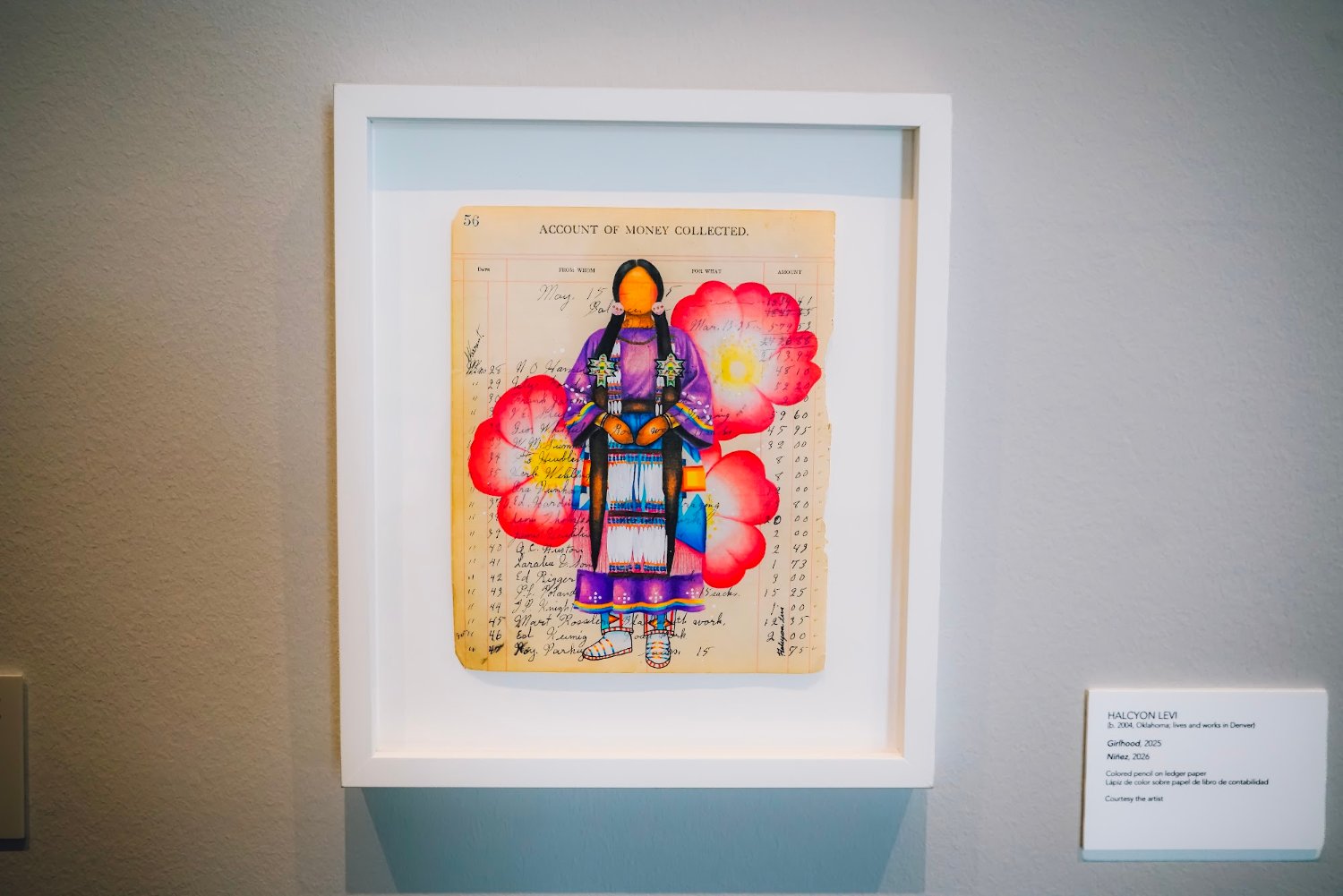
For Levi, the exhibition isn’t separable from the ground it stands on. “As a Southern Cheyenne woman and a descendant of the Sand Creek Massacre, Colorado is my people’s homelands,” she said.
The two artists share space with a wider assortment of artists and their practices in a show (at the MCA Denver through November 1) that moves beyond just landscapes and into a deeper exploration of what lies ahead for Colorado.
“Everytime I’m here,” said Levi about the exhibition, “I think about the generations who came before me, the history and traditional knowledge they held, and everything they endured.” Of the twenty-eight artists gathered under one roof, she speaks of her own inclusion almost shyly: “I’m incredibly honored to have my work included alongside so many inspiring artists.”
“Colorado Currents” is a hopeful exhibition, Lash believes. Though not, she added, by design, an easy one.

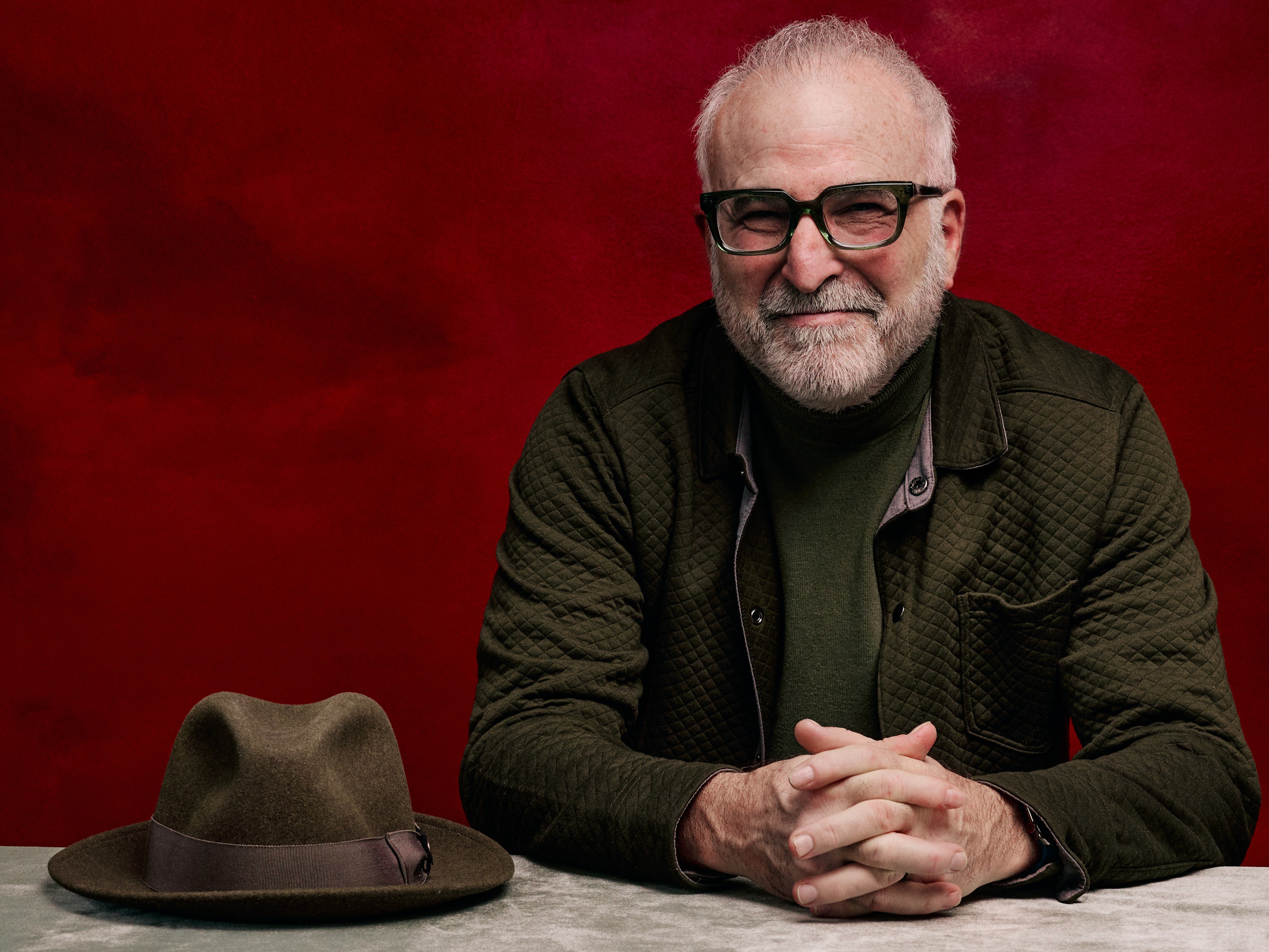
Manuel Aragon
Manuel Aragon, a distinguished Latinx filmmaker and writer from Denver, illuminates the Northside's vibrant community through his speculative fiction collection, Norteñas, and critically acclaimed web series, Welcome to the Northside. His work, recognized by nominations such as the 2020 PEN/Robert J. Dau Short Story Prize and features on platforms like MTV, showcases a unique blend of storytelling and social commentary.











.png)


.png)


.jpg)
.png)


.png)
